Have an account?Log in
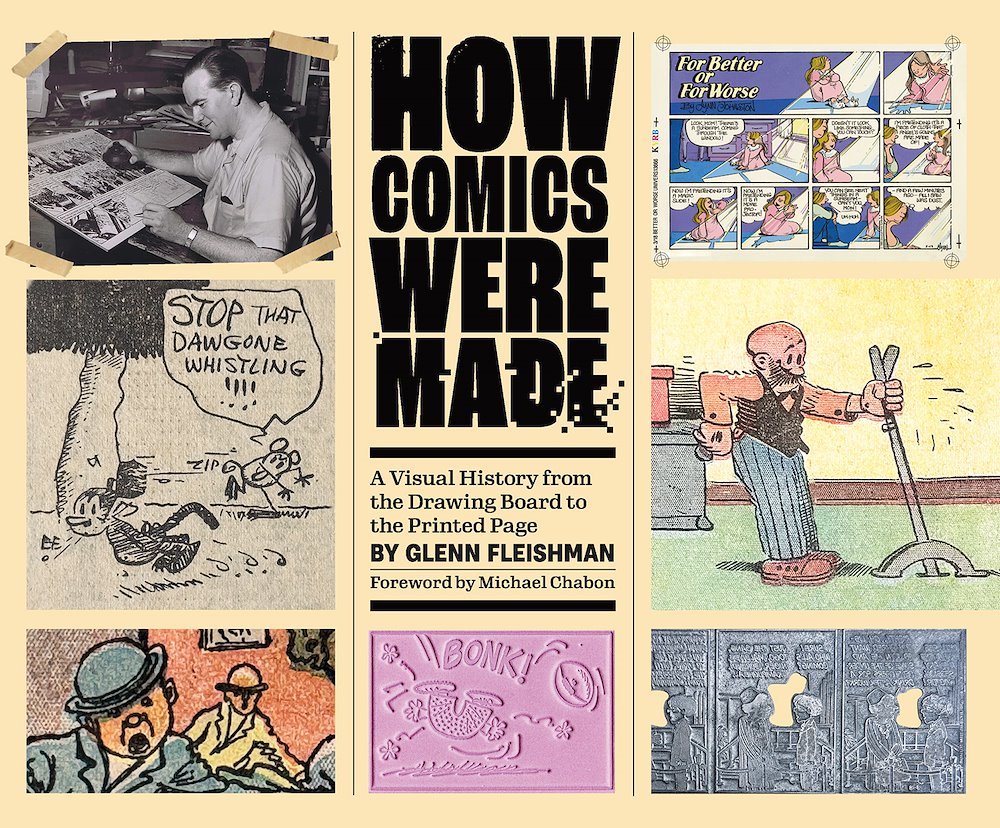
How Comics Were Made
Softcover 288 pp
Additional info
English (United States) · Self-Publishing
About this edition
This special Kickstarter-funded edition was printed in a limited edition.
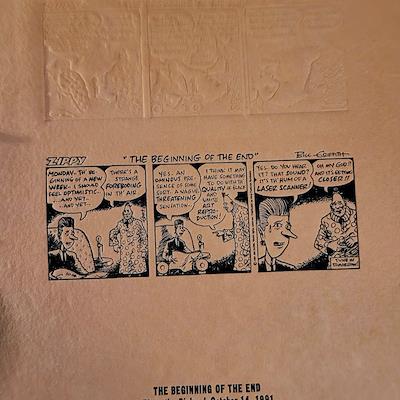
“Zippy the Pinhead” flong re-creation and letterpress print on a page of high-quality, hand-made paper. The print, about 8½ by 11 inches (22 by 28 cm), includes mold impression of a 1991 Zippy comic strip and a print of the same strip. Flongs haven’t been made in decades; this is a unique re-creation suitable for framing.
Plot
Created under license from cartoonist Bill Griffith, Glenn designed the flong and print with letterpress printer Jessica Spring of Springtide Press, who impressed and printed it. This item is available in a limited edition.
Backers also receive the print and ebook editions of How Comics Were Made and a signed bookplate that can be attached to your book.
My book How Comics Were Made celebrates the evolution of the comic strip: from the Yellow Kid and early syndication through the very latest webcomics. This covers the whole ball of wax of how artists, knowing their newsprint medium, drew their comics and marked drawings up for color reproduction; how printers put that work through the most arcane and impossible-to-believe operations to get them onto paper; and how modern cartoonists produce cartoons for print and online or web-only.
How Comics Were Made relies on my personal collection of printing artifacts backstopped with the help of artists, estates, and institutions that thankfully retained original work and newspaper and printed versions. Key among them is the Billy Ireland Cartoon Library & Museum at the Ohio State University in Columbus, Ohio. You can watch a video I made for a 2022–2023 exhibit at Billy Ireland showing one aspect of the artist-to-newspaper process (it appeared in a 2023–2024 exhibition, too). The Charles M. Schulz Museum and Research Center also provided extensive assistance and material.
As part of the book, I interviewed dozens of cartoonists about the aesthetic and functional choices they made and make to ensure their work remains true to their vision through print and online production, particularly around color. I asked how those who started in the 70s and 80s worked through the great metal and analog to offset and digital switch. For instance, Lynn Johnston (For Better or For Worse) told me she was concerned enough at the start of her career to get the Sunday color just right that she flew to Buffalo, New York, to get a hands-on look at the operations of American Color, the largest firm handling and printing color comics in the country. I spoke as well to comics historians, production artists, colorists, and other people across the industry.
In addition to Johnston, among 40 interviewees are Tom Batiuk (Funky Winkerbean, Crankshaft), John “Derf” Backderf (The City, My Friend Dahmer), Paige Braddock (Jane’s World, Charles M. Schulz Creative Associates Chief Creative Officer), Georgia Dunn (Breaking Cat News), Lex Fajardo (Charles M. Schulz Creative Associates Editorial Director, Kid Beowulf), Bill Griffith (Zippy), Guy Gilchrist (formerly Nancy, Muppets, and many others), Jim Keefe (King Features colorist, Sally Forth artist), Garry Trudeau (Doonesbury), comics historian Brian Walker (writer on Beetle Bailey and Hi & Lois, author of The Comics: The Complete Collection), Bill Watterson (Calvin and Hobbes), and Shena Wolf (cartoonist’s agent; formerly Andrews-McMeel Universal).
The book covers the entire history of newspaper comics from a unique angle—how they were made and printed. You can find many other books that I can recommend that look at comics through the lens of artist, biography, genre, and subject matter, as well as hundreds of lovingly, painstakingly restored collections, such as the complete Peanuts and Little Nemo Sunday strips.
How Comics Were Made turns to the stories of creation: What did artists’ originals look like and how were they transformed for print? In the days before digital reproduction, how did a cartoonist tell a printer they wanted a 30% green? How, in fact, did the Yellow Kid get his tint? Does a cartoonist have to conceive of a comic differently now when aiming for multiple print and digital appearances in different formats? The answers are surprising, revealing, and beautiful.
Other digital creative efforts get their day in the sun. While the methods are different, I’ll look into how webcomics artists have created their work for online-only or online-first reading for the last 25-plus years and how that’s changed archiving, reading habits, and perception.
View more
Publication date
November 1, 2024
Art Gallery
What readers say
There are no reviews
The content of this page is licensed under a Creative Commons 4.0 Share Alike license, except for comic images that are the property of their respective authors and publishers. We waive the right of attribution. More info.